

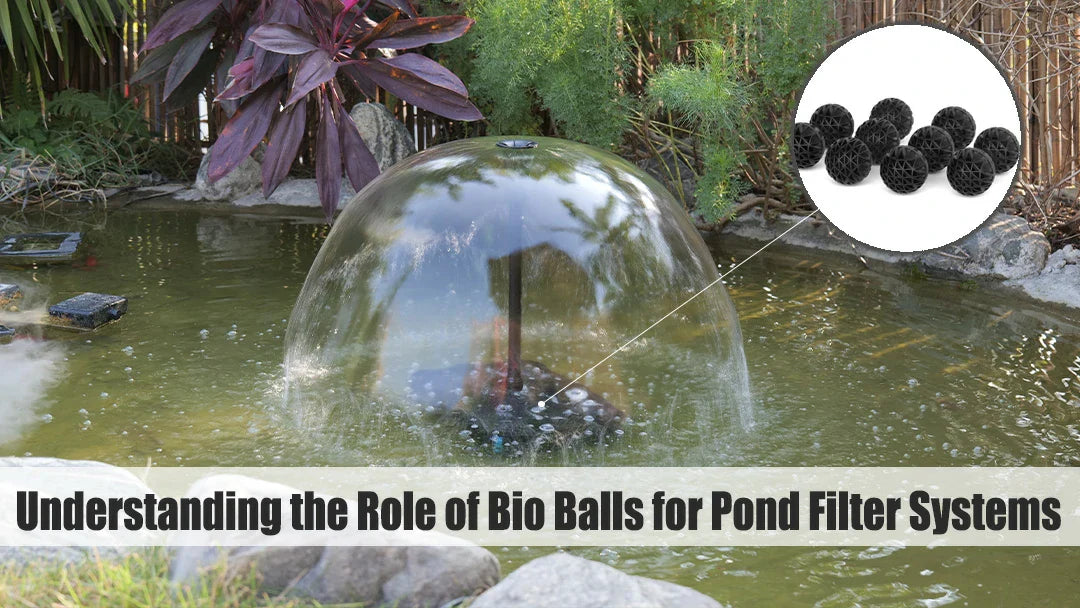
If you've ever taken apart a pond filter and checked what was inside, chances are that you've seen a whole lot of plastic balls and wondered what they were doing in there. They don't trap dirt. They don't look anything like sponges. But removing them will create issues in the water sooner than you can imagine.
The name for those plastic balls is bio balls. The job they perform for a pond filtration system is often underestimated. Bio balls will not make the pond appear clean, but they will maintain the pond's balanced state.
Pond systems are greatly dependent on biological support. Fish waste, fallen leaves, and biological materials decompose constantly. A pond system with inadequate biological support will have a negative effect on water quality. This article will explore what bio balls are, the significance of bio balls in a pond system relative to what many may believe to be the case, and how bio balls may be effectively used in a system that protects an ecosystem.
What is a Bio Ball, and how does it work?
What's a Bio Ball?

The question is: What is a bio ball? A bio ball is a type of plastic designed for only one thing: providing the greatest amount of surface area possible for a small region. This design is quite simple, but the holes, fins, and internal structure are not randomly designed.
Bio balls do not filter out debris like filter pads or foam. The function of bio balls is to offer a constant home for beneficial bacteria. The beneficial bacteria present in the pond are also responsible for breaking down the fish waste present in the water.
How Bio Balls Aid in Biological Filtration
Fish produce ammonia all the time. If left alone, ammonia becomes toxic very quickly. In a balanced pond ecosystem, bacteria help convert ammonia to nitrite and then to nitrate. Nitrate is less toxic.
Bio balls provide a home for these bacteria. As water passes over them, oxygen and nutrients are supplied. Eventually, a bacterial layer will develop on the surface. It is this layer that does all the work in the background.
It is for this reason that removing or over-cleaning bio balls can cause sudden water quality problems, even if the pond appeared to be in good condition beforehand.

Materials and Design Factors
Most of these balls are plastic and are durable enough to withstand degradation by water. Some are more porous, with better water flow. Others are more dense, with more surface area.
It is not the exact form that is so important, but rather the movement and exposure to oxygen. If this is provided, bacteria will grow on any bio-media design.
The Significance of Bio Balls in Pond Filter Systems
Why Pond Aquariums Require Bio Balls Over Aquariums
The dynamics of ponds are much different from aquariums. Ponds are subject to sunlight, changes in the weather, and natural debris. The bioload of fish in ponds tends to be much heavier, particularly in koi ponds or goldfish ponds.
For this reason, pond bio balls are more critical than aquarium bio balls. Biological filtration in a pond cannot be optional. It forms the foundation of water clarity.
If there is not enough biological surface area present in ponds, they can cycle back and forth between a state of clear water and a sudden algae or odor issue.
Bio Balls vs Other Filtration Media
Mechanical filters filter out what you can see. Bio balls filter out what you can't see. They don't replace sponges or filter pads. They supplement these.
The problem in many ponds arises from people's focus on visible dirt while ignoring biological capacity. It should not be assumed that clear water is clean.
Aquarium Bio Balls vs Pond Bio Balls
Aquarium bio balls and fish tank bio balls are generally designed for indoor applications. Water current is constant. Debris levels can be predicted.
Pond systems are less tolerant. Bio balls designed for outdoor applications have to account for temperature, oxygen, and organic matter changes. This is why pond-specific designs tend to be more open and less likely to clog.
How to Utilize and Maintain Bio Balls in a Pond Filter

Proper Placement within the Filter
Bio balls should always follow the mechanical filter. Large particles should always be removed before the water reaches the bio balls. This will prevent the bacterial surface areas from being covered by sludge.
In most cases, pond filters use bio balls most efficiently in a chamber where water flows at an even rather than turbulent velocity.
How Many Bio Balls Are Enough?
There is not a specific formula. More ponds and heavier fish populations mean a greater need for biological surface area. It is always better to have a little extra biological capacity than to not have enough.
Systems like the 40W 480GPH Solar Pond Filter Fountain by Poposoap are meant to support biological media with constant circulation. In a system like this, bio balls are used to provide stability in the water conditions rather than constantly adjusting.
Cleaning Without Killing Useful Bacteria
This is where many pond owners go wrong. Bio balls need not be cleaned the way filters are. Using tap water or scrubbing the bio balls will eliminate the bacteria they are intended to host.
Follow these steps when cleaning is needed:
- Rinse bio balls with pond water only — never tap water.
- Clean only a portion of the bio balls at a time.
- Allow bacteria colonies to recover before cleaning the next batch.
This helps bacteria colonies recover without resetting the biological cycle.
Conclusion
Bio balls are not very glamorous. They do not produce waterfalls and bubbles. Nevertheless, bio balls are involved in one of the most crucial processes that occur in a pond: biological stability.
Knowing how bio balls function, why ponds require them more than aquariums, and proper methods for maintaining them will help prevent many water quality problems before they become issues.
If you are interested in exploring other issues relating to maintenance, you might find the following useful: Solar Water Pump Common Problems & Solutions

P3403 40W 480GPH Solar Pond Filter Fountain
$143.99
Solar pond pump and filter kits with 40W panel and 480GPH pump, filter box, nozzle + diverter valve, filter mats and biospheres. Solar powered fish pond filter.
FAQ
Are bio balls necessary for every pond?
Not all ponds need them, but biological media are almost essential for fish ponds.
Can I substitute bio balls with sponges?
Sponges give some biological filtration but clog quicker and are generally less stable.
How long will bio balls last?
If treated gently and not subjected to strong cleaning, quality bio balls can last for a number of years.
Will bio balls eliminate the algae problem on my pond directly?
No. They inhibit the buildup of nutrients, thereby indirectly preventing algae from growing.
Are bio balls compatible with solar pond filters?
Yes. Many solar pond filters are intended for use in conjunction with circulation and biological media.


Laisser un commentaire
Tous les commentaires sont modérés avant d'être publiés.
Ce site est protégé par hCaptcha, et la Politique de confidentialité et les Conditions de service de hCaptcha s’appliquent.