

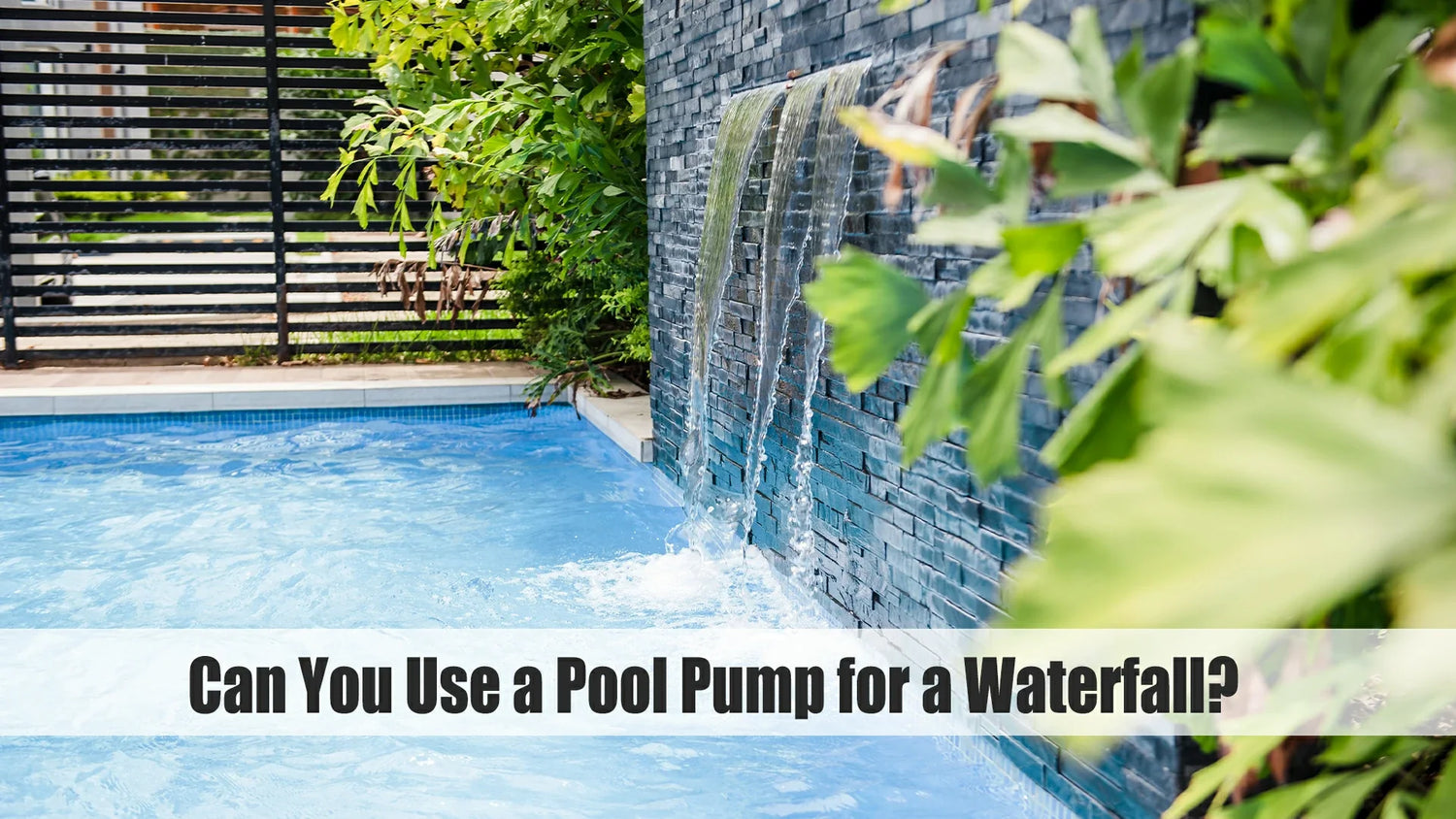
You've designed a backyard waterfall, and now you're selecting the right pump to give it life. Then, a thought occurs in your mind, "Can I just use a pool pump for my waterfall?" After all, you might already have one on hand, and it seems powerful enough.
It's a common question for DIY pond owners. On paper, pool pumps and waterfall pumps seem similar — both move large volumes of water. But in reality, they're designed for very different purposes. Using a pool pump for a waterfall can work temporarily, but it's rarely efficient, safe, or sustainable in the long run.
Now, let's look at each type to see how it functions, the differences between them, and when a solar-powered alternative might be the smarter, greener choice, such as Poposoap's Waterfall & Pond Pump Kits.
Why People Consider Using Pool Pumps for Waterfalls

The main reason is simple: availability and power. Pool pumps are robust, efficient, and built to circulate thousands of gallons of water daily. If you already own one, it's tempting to repurpose it to drive a swimming pool waterfall or even a decorative garden cascade.
But power doesn’t equal suitability. A pool pump is engineered to push clean, filtered water through plumbing, not to handle the debris, varying depths, or pressure conditions found in either natural-style ponds or rock waterfalls.
That means whereas it can work, it may not work well for long.
How Pool Pumps Work
A pool pump pulls water from the pool through the skimmers and drains, then pushes it through a filter and back into the pool. It requires closed-loop, low-friction plumbing in other words, it works best if water moves through smooth, even pipes with little friction.
The motor is a high-speed pressurized flow model, not a high-head model built for lifting water vertically, or working with leaves, algae, and sand commonly found in ponds and waterfalls.
Can You Actually Use a Pool Pump for a Waterfall?
Technically, yes — but with several important caveats.
You can connect a pool pump to a pond or waterfall feature if:
- The water is clean and free of debris.
- Dry running is avoided as the pump remains fully submerged or primed.
- You have proper plumbing and check valves to prevent backflow.
However, there are downsides:
- High Energy Consumption: The pumps run at higher speeds and wattage, hence drawing much more power than is actually required.
- Overheating Risk: Continuous running in outdoor pond conditions results in overheating and motor wear.
- Clogging: Pond water contains organic debris that pool pumps aren’t built to handle.
- Noise: Obviously, pool pumps can be loud, which might disturb the serenity that you want in your garden.
So, yes, you can use one — but it’s like using a sports car to haul gravel. It works for a bit, but it’s not built for the job.
Pool Pump vs Waterfall Specialty Pump — The Key Differences

| Feature | Pool Pump (Standard/VS) | Waterfall Pump |
|---|---|---|
| Purpose of Design | Filtration and pressure circulation in clean, chlorinated systems | High flow/low-pressure applications where there is a lot of dirt, leaves, and uneven terrain. |
| Energy Efficiency | Variable Speed (VS) models are highly efficient but can consume more power when forced to mimic high-flow features. | Highly efficient for decorative features; often consumes 50% less electricity than a pool pump doing the same job. |
| Durability | Built for 8 hours/24; however, constant high-speed use for waterfalls can lead to premature motor wear and cavitation. | Engineered for continuous 24/7 operation with specialized impellers that resist wear in low-pressure applications. |
| Noise and Flow | Generally louder at higher RPMs (3,400+); flow can be turbulent or restricted. | Designed for whisper-quiet operation; provides a smooth, "laminar" (glass-like) flow for sheer descents. |
1. Purpose of the Design
- Pool Pump: Filtration and pressure circulation in clean, chlorinated systems.
- Waterfall Pump: The right choice for high flow/low-pressure applications where there is a lot of dirt, leaves, and uneven terrain.
2. Energy Efficiency
Waterfall pumps, in particular, are much more energy-efficient; their solar-powered DC from Poposoap comes fitted with ultra-efficient brushless motors and an adjustable flow control to keep operating costs near zero when powered with sunlight.
3. Durability
The waterfall pumps have corrosion-resistant impellers and larger intake screens to prevent clogging, while allowing the pumps to run safely outdoors 24/7. Usually, pool pumps aren't weather-sealed for constant outdoor exposure.
4. Noise and Flow
The specialty waterfall pump creates smooth, natural flow patterns of water, whereas pool pumps create strong, pressurized jets of water that may appear very unnatural and might sound harsh.
How to Use a Pool Pump for a Pond or Waterfall (If You Must)
If a pool pump is your only short-term option, here's how to make it work safely:
- Add pre-filtration by installing a mesh basket or screen to keep debris out.
- Keep it shaded. The pool pumps are not designed for direct outdoor exposure; shelter them from rain and sun.
- Avoid dry running - always immerse the pump or keep it primed.
- Be aware of the water temperature. Running in hot water for too long leads to overheating.
- Employ timers. Reduce runtime to prevent the burning of motors and wasting of energy.
Even with these precautions, it should only be a temporary setup.
Better Alternatives to Pool Pumps for Waterfalls
For long-term use, you could buy a pump that's for outdoor water features. These are:
- Submersible waterfall pumps are suitable for small and medium features. Installation is generally a straightforward process, and they are quiet.
- External waterfall pumps are ideal for larger falls that may require higher flow rates.
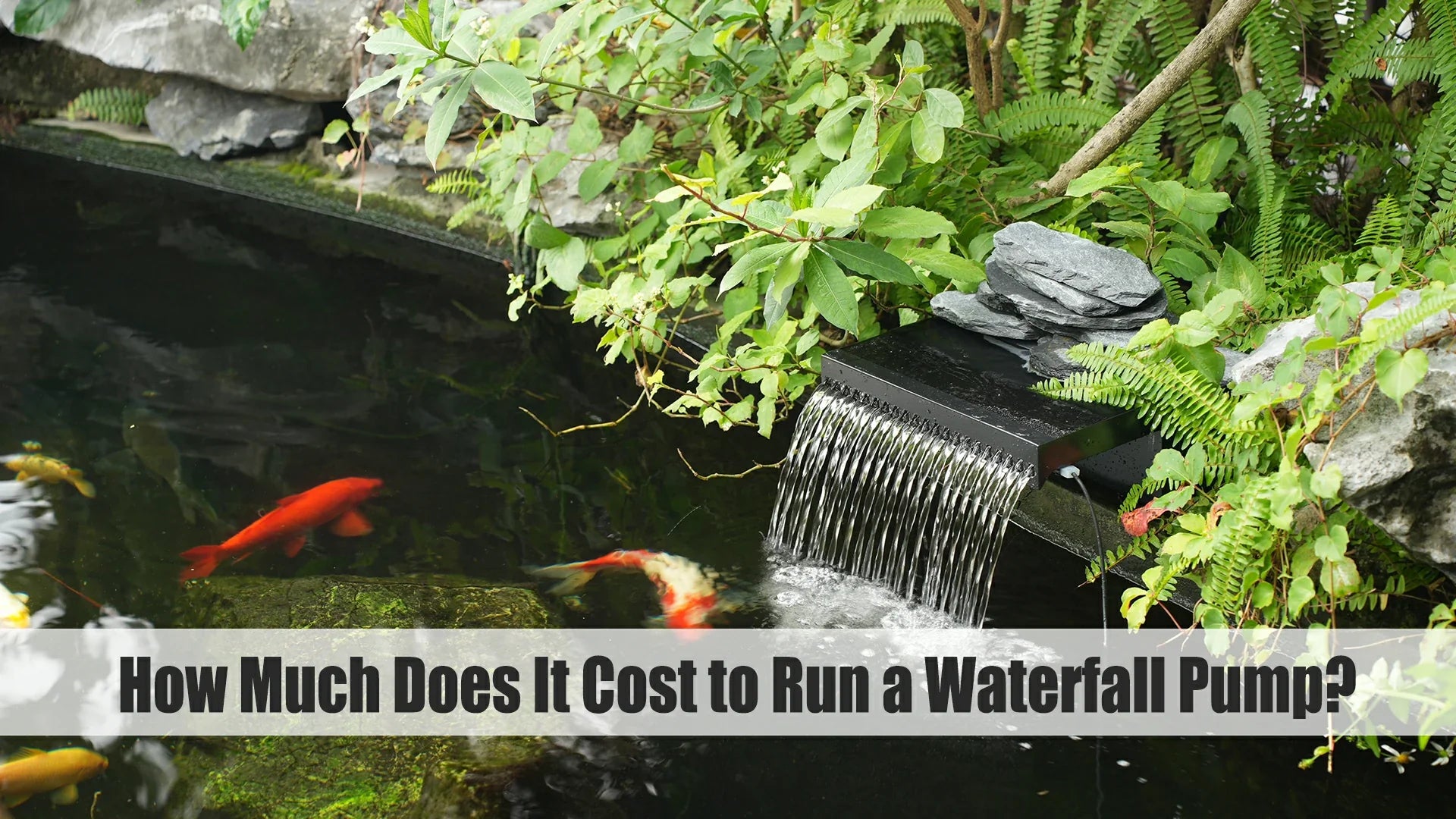
- Solar waterfall pumps are powered by sunlight-energy-free-and provide a creative choice for the eco-sensitive garden.

Poposoap Solar Waterfall & Pond Pump Kits integrate brushless DC motors, solar panels, and filtration boxes for strong and continuous water flow without electricity bills. Engineering has focused on durability, ease of setup, and quiet performance; it also fits the bill in terms of sustainability and aesthetic appeal.
Energy Efficiency — Pool vs. Waterfall Pumps
Operating a typical 1-horsepower pool pump can cost anywhere from $60 to $100 a month. This is in contrast to the solar powered Poposoap waterfall pump, which costs absolutely nothing once it is installed.
Even grid-powered waterfall pumps use far less wattage—usually 10–20% of a pool pump’s draw. For most garden waterfalls, that’s all you need for a lively, soothing effect.
When to Upgrade to a Proper Waterfall Pump
If your waterfall is set up outdoors, is natural, or runs continuously, it's time to upgrade. Pool pumps are only designed to be used in controlled systems, not open, debris-heavy water. Proper waterfall specialty pumps or a solar-powered pond pump will:
- Lower your energy bills
- Reduce maintenance time
- Last longer under continuous operation
- Provide more natural, gentle flows of water
Changing over to a solar-powered system also aligns with eco-friendly garden practices-a core principle of the Poposoap brand, which touts sustainable outdoor living and wildlife-safe design.
Conclusion - Use the Right Pump for the Right Job
While a pool pump can power a waterfall in a pinch, it's far from ideal for long-term operation. Waterfall-specific and solar-powered pumps are quieter, cleaner, and more efficient-designed precisely for the outdoor conditions and aesthetics you want. So, if you're planning a swimming pool waterfall or garden cascade, consider sustainability from the outset.
The Poposoap Waterfall & Solar Pond Pump Kit is a great, efficient, environmentally friendly solution that ensures your water keeps flowing beautifully without breaking the bank or harming the environment.

70W 580GPH Solar Waterfall Pump Kit with 12"x13.4" Spillway
$269.99
Create a beautiful solar waterfall with this 70W kit. Includes a 12"x13.4" metal spillway and 40W 580GPH pump for eco-friendly backyard pond designs.
FAQs — Using Pool Pumps for Waterfalls
Temporary, yes. However, since there are possibilities of clogging, noise, and high energy costs, long-term use is not recommended.
Generally, yes, but "stronger" does not mean "better." Waterfall pumps are optimized for high volume and low pressure; pool pumps are high pressure, low volume.
A solar waterfall pump by Poposoap includes powerful flow without electricity costs and without maintenance worries.

Leave a comment
All comments are moderated before being published.
This site is protected by hCaptcha and the hCaptcha Privacy Policy and Terms of Service apply.