

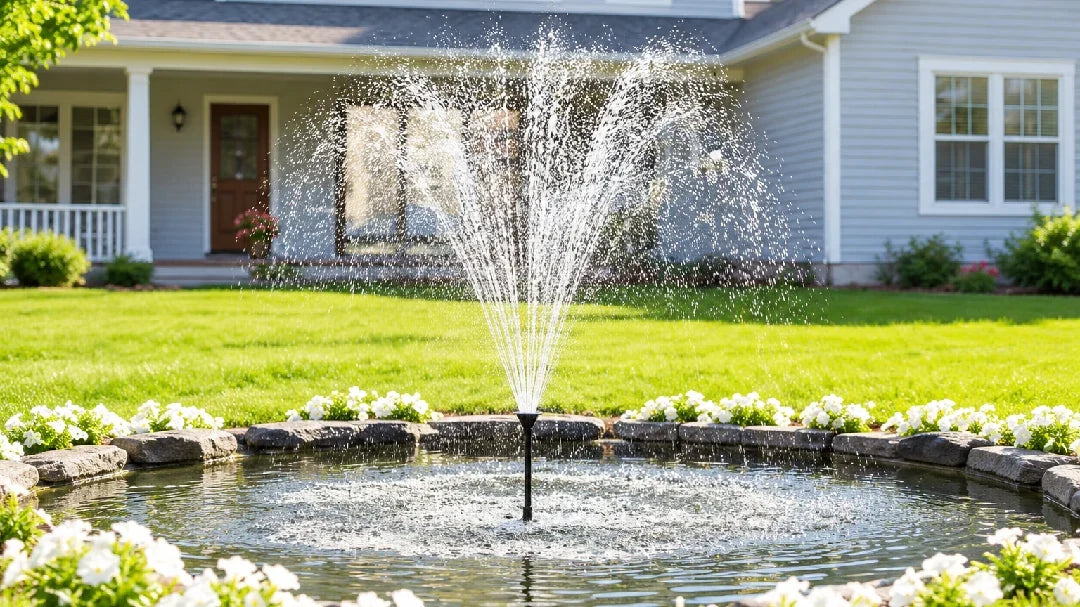
Establishing a new pond is always an interesting task. But one has to bear in mind that any new pond needs some time to become biologically established. Prior to adding fish to the pond, you need to build up the population of beneficial bacteria. It is the process called pond cycling. And a properly cycled pond will cope with fish waste much better. This guide will help you understand how to cycle your new pond, what the time period of this process is, and how you can do it faster and safely.
Pond Water Cycle Understanding: Why Does a New Pond Need a Cycle?
A new pond needs a cycle because of its lack of beneficial bacteria.
The pond water cycle is the natural process that helps to keep water clean. It is mostly based on the nitrogen cycle (a biological process where beneficial bacteria neutralize harmful waste).
When you add fish to a pond, they excrete waste. And such things as dead leaves, uneaten fish food, etc. decompose and produce ammonia.
The basic process of the pond water cycle is the following:
- Fish waste produces ammonia.
- Beneficial bacteria neutralize ammonia and produce nitrite.
- The second type of bacteria neutralizes nitrite and produces nitrate.
- Plants and regular pond maintenance keep the level of nitrate stable.
Both ammonia and nitrite are harmful to fish in excess quantities. A mature pond has enough beneficial bacteria to neutralize these substances naturally.
Why New Ponds Need Time to Become Stable
Even if a newly created pond looks clean, its water system is still developing.
Beneficial bacteria need the proper environment to develop.
They require:
- Oxygen-rich water
- Filter surfaces to settle on
- Stable water temperature
- Constant supply of nutrients
And that is why you cannot rush with your new pond.
Many pond beginners think that if the water looks clear, then the biological system of a new pond is ready. But this assumption is not necessarily true.
How Long Does It Normally Take to Cycle a Pond?
A new pond takes about 4 to 8 weeks to go through the cycling process, but this period depends on specific pond conditions.
Many pond owners try to find out the fastest way to cycle a pond because waiting for several weeks can be quite difficult. But you have to focus on improving conditions for bacteria rather than skipping some crucial steps.
What Factors Influence the Pond Cycling Period?
Several factors can influence how fast a new pond becomes stable.
Water Temperature
Beneficial bacteria multiply faster in warm water.
So during the warm seasons, cycling will go faster. And during cold seasons, bacterial activity decreases.
Filtration System
A good filtration system provides places for beneficial bacteria to settle.
A filtration system removes waste and provides surfaces for beneficial bacteria to settle on.
And a poor filtration system can delay the cycling process because of rapid waste accumulation.
Water Circulation
Proper water circulation is also important.
A solar pond pump circulates water around the pond. Proper circulation helps oxygen and nutrients to spread around the pond.
Oxygen System
Why is it so important to maintain oxygen in your pond during cycling?
Because beneficial bacteria need oxygen to live.
Low oxygen content can slow bacterial activity and spoil water quality.
Proper aeration, fountains, and a correctly chosen pump will help you maintain the oxygen level during pond cycling.

Fastest Way to Cycle Your Pond
The fastest way to cycle a new pond is to prepare a perfect environment for beneficial bacteria from the very beginning.
A combination of proper filtration, oxygen, circulation, and regular testing will help your new pond become stable faster.
First Step: Install Your Pump and Filter Before Fish Introduction
The first step is the installation of your pond equipment.
Before introducing fish to your pond, you need to:
- Install your pump
- Start your filtration system
- Make sure that water is circulating
- Run the system constantly
The filter media (the materials inside the filter where beneficial bacteria live) is a place for the biggest part of the bacterial population.
A proper filtration system will help you make your cycling process smoother.
Poposoap filter fountain systems are specially designed for garden ponds and are able to support water circulation and filtration in them.
Second Step: Add Beneficial Bacteria
The addition of bacterial products will help introduce bacteria to a new pond.
But bacterial products can be effective only when there is:
- Good oxygen content
- Proper filtration
- Proper water circulation
The addition of bacteria alone won't cycle a pond immediately.
The environment has to support bacterial development.
Third Step: Maintain Proper Water Circulation
Water circulation is crucial for pond cycling.
Proper circulation helps:
- Spread oxygen all around the pond
- Circulate waste to filtration areas
- Avoid stagnant zones
A poorly circulated pond will become stable later.
Fourth Step: Regular Water Testing
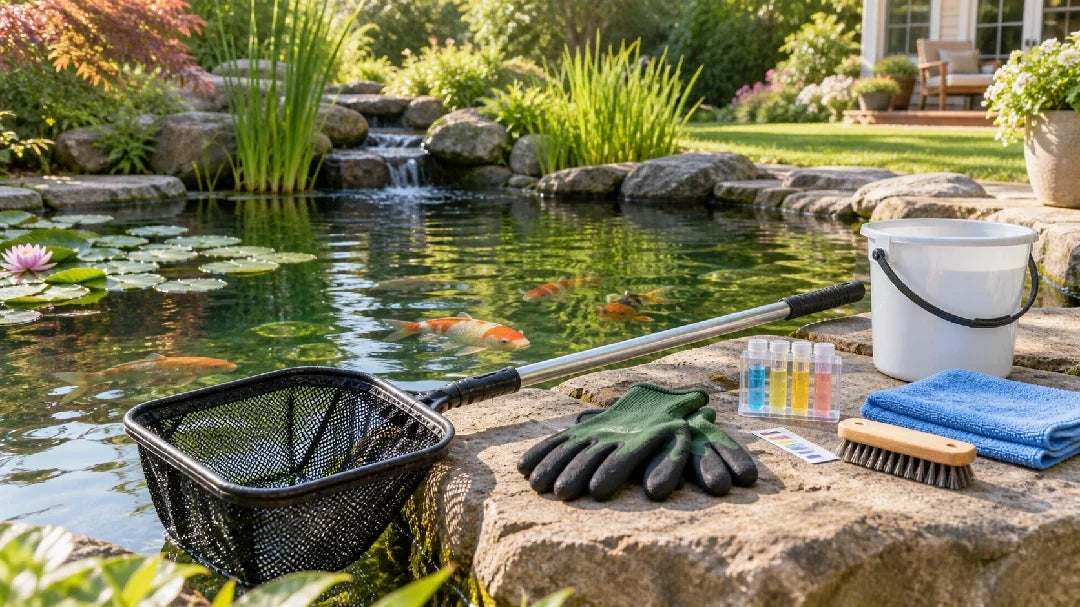
Water testing is a good way to track the development of your pond.
You have to test:
- Ammonia
- Nitrite
- Nitrate
- pH
During pond cycling, ammonia can increase first, then nitrite levels can rise, and finally, nitrate becomes the main product of the pond water cycle.
Do not add fish to your pond until ammonia and nitrite become stable.

Simple Pond Cycling Procedure
Beginners can follow this simple procedure for pond cycling:
- Step 1: Fill the pond with water.
- Step 2: Install the pump and filtration system.
- Step 3: Turn on circulation and aeration.
- Step 4: Add beneficial bacteria (if necessary).
- Step 5: Test your water every few days.
- Step 6: Wait for ammonia and nitrite stabilization.
- Step 7: Add fish.
Common Mistakes That Slow Down the Process of Cycling
Many new pond owners make some mistakes that can slow down the pond cycling process.

Adding Fish Too Early
If you add fish to your pond before the establishment of the bacterial population, you risk facing an ammonia problem.
Only some fish can survive, but the pond will become unstable.
Frequently Turning Off Filtration
Beneficial bacteria need oxygen.
That is why frequently turning off pumps or filtration systems will decrease bacterial activity.
Excessive Addition of Fish Food
Additional food increases waste.
During the pond cycling process, you shouldn't feed your fish too much.
Cleaning Filter Media with Tap Water
Tap water usually contains chlorine.
And this substance can harm beneficial bacteria.
If you need to clean your filter materials, use water from the pond.
Too Many Water Changes
Large water changes can also slow down bacterial development.
Small water changes will not influence the bacteria.
Build a Healthy Pond with Poposoap
You will build up a healthy pond with a stable cycle faster with Poposoap.
The fastest way to cycle a pond is to provide a good environment for bacteria to live. Proper filtration, proper oxygen content, constant water circulation, and regular testing will help you make your pond stable faster.
A well-maintained pond system also simplifies your future work. You have to choose reliable pumps and filtration equipment to decrease daily maintenance.
When your pond completes the cycle, water quality maintenance will become easier.

20W Solar Filter Fountain
Built-in 280 GPH pump, filter box + bio media, 4 spray heads, 6.5ft tubing, low-water protection.
Shop NowFAQ
How long does it take to cycle a new pond?
Most new ponds take about 4 to 8 weeks. The exact time depends on temperature, filtration, oxygen, and bacterial growth.
What is the fastest way to cycle a pond?
Use proper filtration, maintain oxygen levels, add beneficial bacteria, and test water regularly.
Can I add fish while cycling a pond?
It is not recommended. Adding fish too early can cause ammonia and nitrite problems.
Should my pond pump run during cycling?
Yes. Continuous circulation helps provide oxygen and supports beneficial bacterial growth.

Leave a comment
All comments are moderated before being published.
This site is protected by hCaptcha and the hCaptcha Privacy Policy and Terms of Service apply.