

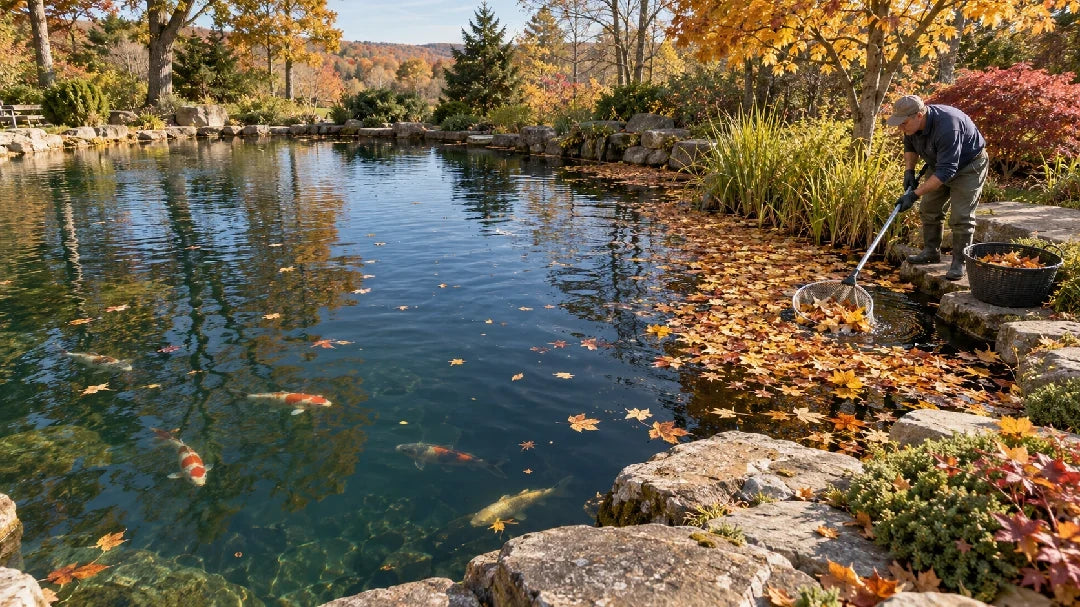
For small ponds, a full net cover is an efficient way to prevent debris from entering the water. For large ponds, a full cover might not be possible. The good news is that not all pond water requires protection against leaves.
Why Are Fallen Leaves a Problem in a Large Pond?
First of all, fallen leaves settle in the pond water, decompose, and become a source of organic waste in the water.
Floating Leaves and Debris vs. Sunk Debris
Fresh leaves that fall in a pond are fairly easy to collect. Most of them stay on the water surface until they absorb water.
As soon as a pond leaf sinks, it becomes much harder to remove. Therefore, surface cleaning is always the best way to start the process.
Organic Accumulation and Muck
Sunk leaves don't simply disappear in a pond. On the contrary, they decompose and mix with algae, fish waste, and other organic matter (materials from living organisms).
Over time, this mixture forms a thick layer of muck in the pond. Some level of natural debris is okay, but too much of it complicates future maintenance of the pond.
Why Timing is Important
The best time to remove leaves is when they are floating in a pond.
In peak fall, visit your pond more often than usual. You don't need to collect each leaf immediately. Concentrate on larger groups of debris, especially after windy days.
Regular short cleaning sessions are often more effective than one intensive session at the end of the fall period.
How Can You Remove Leaves Without Covering the Whole Pond?
You can remove leaves without a full cover using nets, rakes, skimmers, and natural collection areas of a pond.
Long-Handled Pond Nets
A long-handled pond net is the easiest way to start cleaning.
Stand on the bank of the pond and collect floating debris with a net. A wide net allows collecting larger groups of debris easily.
Try not to fill the net with debris. Wet leaves add quite a lot of weight to the net.

Pond Rakes and Surface Skimmers
A pond rake can draw floating leaves and plant debris closer to the shore.
It will be useful in cases where you can't reach some areas of the pond using the hand-held net.
Skimmers provide another solution for collecting debris. Floating leaves and plant debris can be collected with surface skimmers.
In peak fall, check the contents of the skimmer basket more often. In autumn, a skimmer basket might fill faster than it usually does in other seasons.

Floating Debris Collectors
Floatable debris collectors are helpful in gathering scattered leaves together.
Though such devices can't replace manual collection, they can significantly simplify cleaning of a large pond. Instead of chasing floating debris in different corners of a large pond, you will collect them in one or two points.
Target High-Accumulation Areas
See how leaves collect in your pond.
Often, wind blows debris in one particular direction – towards the same bank, corner, inlet, or plant group. This is the area you need to focus on first.
If you wonder how to keep leaves out of the pond water without a net cover, finding natural collection spots will significantly save your time.

Can Aeration and Circulation Help with Fall Leaves?
Yes. They are very helpful in water quality improvement and moving debris but they won't replace physical removal of leaves from a pond.
Whole-Pond Circulation
Circulation removes stagnant zones in the pond.
Also, circulation can move floating leaves to the skimmer or other collection spot. Observe water surface for a few days to see how wind moves debris in the pond. Then focus on cleaning the relevant areas.
Aeration and Beneficial Bacteria
Aeration adds oxygen to the water in the pond. Beneficial bacteria (microorganisms) need oxygen to break down organic matter.
This process will support natural functions of the pond, but it doesn't mean that you can leave piles of leaves in the water.
Removing leaves is the simplest way to do it.
Keep Debris Away From Problem Areas
Be careful about the pumps, drains, inlets, and skimmers.
These areas are prone to the accumulation of leaves and interference with the water circulation. Check them each time you clean the surface of the pond.
A quick inspection prevents leaves from accumulating and becoming a major problem.
What Is the Easiest Fall Leaf Routine for a Large Pond?
The easiest fall routine for your pond is following weather changes, removing floating leaves on regular basis, and doing one deep inspection before the end of the fall season.

Clean After Windy Days
Wind blows many leaves into a pond in a short period of time.
Therefore, after a windy day, walk around the pond and look for groups of floating debris. Start the cleaning process in areas where the wind blew the most leaves.
Remove Leaves Before They Sunk
Don't wait for floating leaves to disappear.
They haven't actually disappeared but just sank in the water.
Removing them from the surface is usually easier than cleaning wet debris on the bottom. Regular short inspections in case of intensive leaf fall can help.
Check Inlets, Skimmers, and Pumps
Each time when you collect floating debris, also check the pond equipment.
Clean full skimmer baskets and remove leaves from pumps and inlets which are accessible. You don't need to organize separate maintenance day for it. Make it a part of the short cleaning process.
Organize a Late-Fall Inspection
When the most of trees around your pond are bare, do one final inspection.
Collect remaining floating debris and inspect natural accumulation areas. Also, clean accessible equipment and look for visible accumulation near the edges of the pond.
The pond doesn't need to be perfectly clean. The goal is to reduce the amount of leaf material that decomposes in the winter.
Manage Leaves in Small and Regular Sessions
A large pond doesn't require a net cover to remain manageable.
Collect leaves before they sink, concentrate on natural accumulation areas, and maintain proper circulation. A few short cleaning sessions in the fall season can be easier than one big cleaning event.
If you use the POPOSOAP pond or fountain set, leaf inspections will become part of the regular maintenance process. Though the equipment can help with circulation, you need to physically remove the debris.
The simplest rule is also the most helpful: don't wait for leaves to sink.

8000GPH Floating Pond Fountain Aerator
Designed specifically for large ponds and lakes to promote better water circulation.
Shop NowFAQ
Can I leave some leaves in my pond?
Yes. It is normal to leave a few leaves in the water. But try to prevent excessive leaves from sinking and creating layers on the bottom of the pond.
How often should I remove leaves in fall?
Visit the pond every few days during intense leaf fall and after windy days. Collect large groups of debris as soon as possible.
Does a pond aerator remove leaves?
No. The aeration system provides oxygen and proper circulation but it doesn't remove any debris. Use a net, skimmer, rake or a similar tool for this.
Should I remove leaves from the bottom?
Yes, if there is a lot of debris on the bottom. But regular surface cleaning reduces the amount of sinking debris.


Leave a comment
All comments are moderated before being published.
This site is protected by hCaptcha and the hCaptcha Privacy Policy and Terms of Service apply.